Dental implants replace missing teeth with a small titanium post set into the jaw and a crown on top that looks, feels and works like a natural tooth. A missing tooth changes how you eat, how you speak and how you feel about smiling, and we know most people put off dealing with it longer than they would like. At our Cloverdale clinic, we walk you through the options, explain the cost before anything starts, and place implants right here rather than referring you across town.
Is an Implant the Right Choice for You?
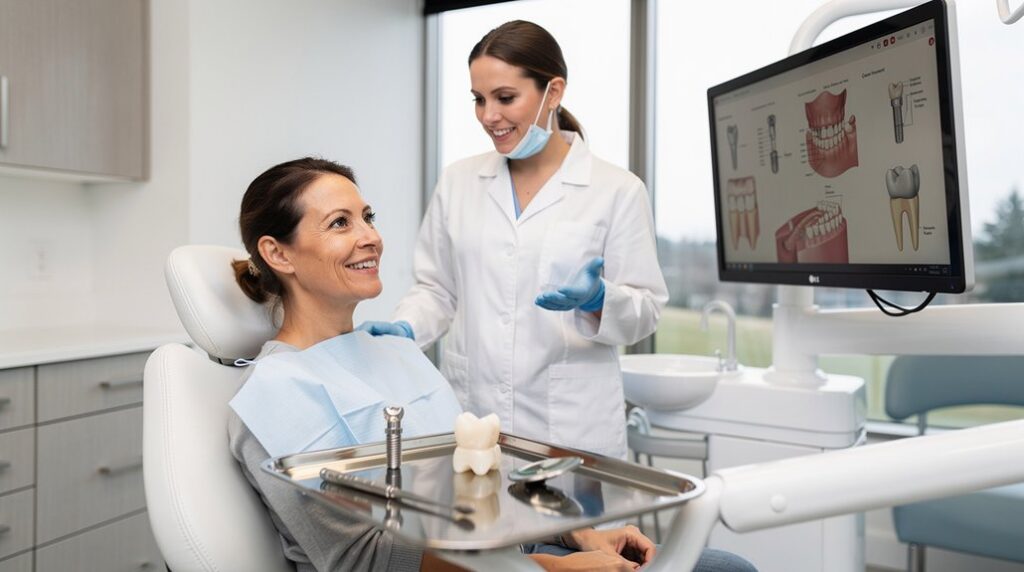
Not every missing tooth needs an implant, and we will tell you if a simpler option suits you better. There are three main ways to replace a tooth:
- A dental implant is the closest thing to a natural tooth. It stands on its own, keeps the jawbone healthy, and does not rely on the teeth beside it.
- A bridge is a fixed replacement anchored to the neighbouring teeth. It is quicker and less costly than an implant, but those neighbouring teeth need to be reshaped to hold it.
- A partial or full denture is removable and the most affordable option, and it is often the right fit for several missing teeth or complete tooth loss.
Implants suit people with healthy gums and enough jawbone to hold the post. If you have been missing a tooth for years, some bone may have shrunk, and we will let you know if you need a small bone graft first.
Who Places Your Implant
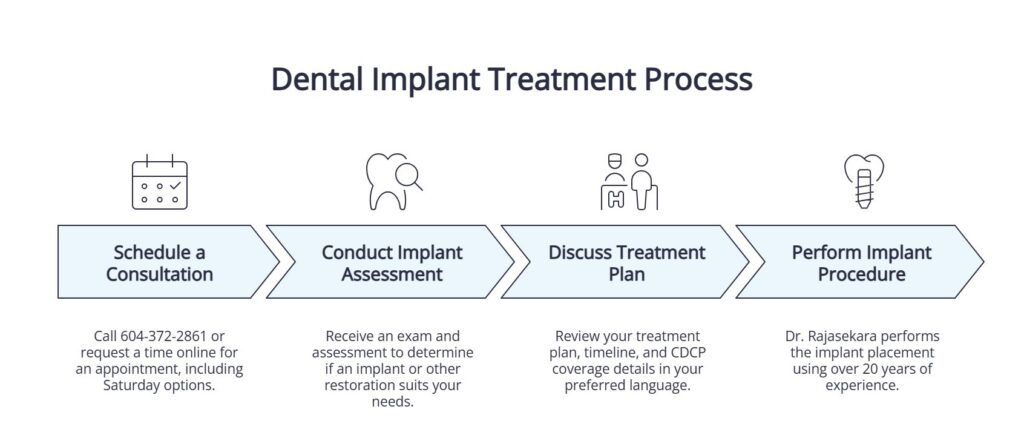
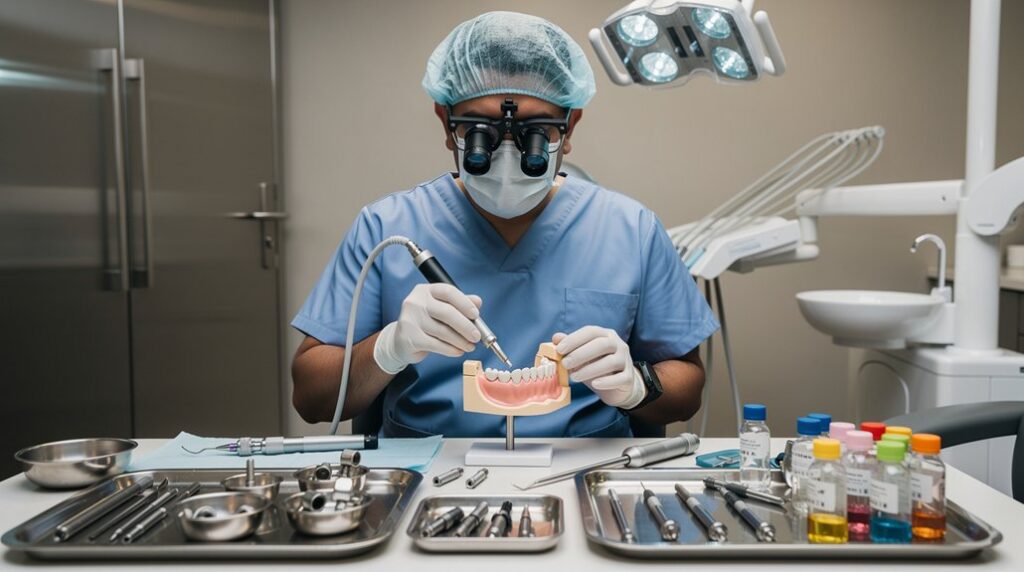
Dr. Sugath Rajasekara places implants at our clinic and brings more than 20 years of dental experience to your care here at Pearl Care Dental. He earned his BDS in Sri Lanka in 1999, completed the Canadian NDEB equivalency process in 2016, holds a fellowship from the International College of Continuous Dental Education in Singapore, and completed his implant training in Philadelphia. He will explain each stage in plain words, and you can ask as many questions as you like before deciding.
What to Expect
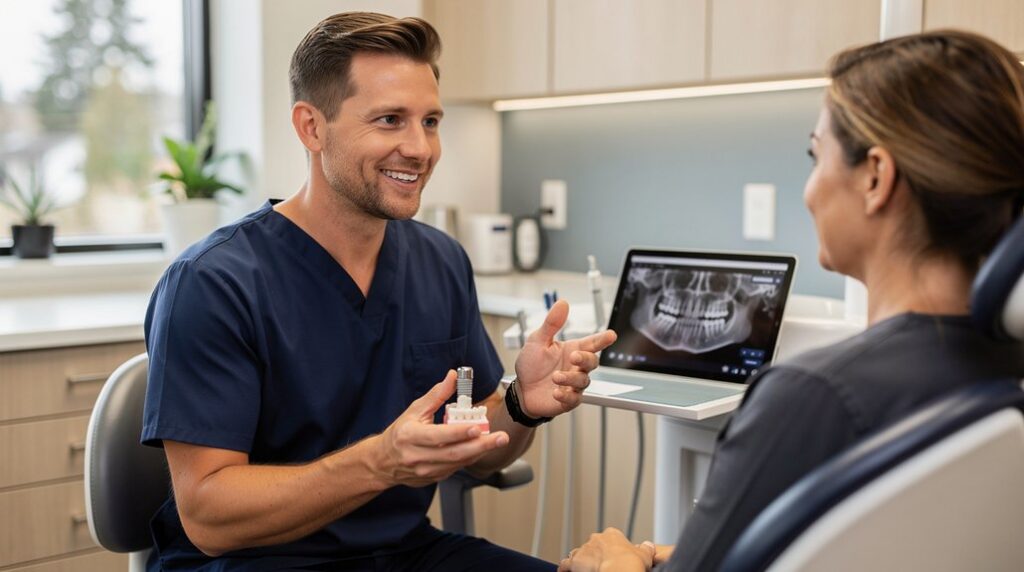
Treatment starts with a consultation, where we examine your mouth, take X-rays, check your gums and bone, and go over your health history. If an implant is the right choice, the post is placed under local anesthetic at your next visit, with oral sedation available if you are anxious. The jawbone then grows around the post over three to six months, and you can wear a temporary tooth in the meantime. Once the implant is solid, we fit a crown matched to your other teeth, and you are done.
Cost and the Canadian Dental Care Plan
We want to be clear about this, because it comes up at almost every consultation. The Canadian Dental Care Plan does not cover dental implants. It does cover many related services, such as the extraction of a damaged tooth and full or partial dentures, so if you are a CDCP patient, we will show you exactly which parts of your treatment the plan helps with and what you would pay for the implant itself. You will have the full cost in writing before we book anything, and our CDCP page explains the plan in more detail.
Saturday Appointments and Care in Your Language
If weekdays belong to work and school, we are open Saturdays from 9:00 am to 5:00 pm for implant consultations. Our dentists speak English, Sinhalese, Tamil, Punjabi, Hindi and Urdu, so you can discuss your treatment plan, costs and aftercare in the language you are most comfortable with.
Serving Cloverdale and Nearby Communities
We are in the Bristol Centre at #115, 5738 175 Street, Cloverdale, an easy drive for patients in Clayton Heights, Fleetwood, Panorama Ridge, South Surrey and Langley, with parking right outside.
Give Us a Call

Call 604-372-2861 or request an appointment online at pearlcaredental.ca. We will look at your options, explain the cost, and let you decide with no pressure.
Question Often Asked
The full process usually takes three to six months from placement to the final crown, and most of that is healing time. If you need an extraction or bone graft first, expect to add a few months to that.
Most healthy adults are good candidates for an implant. Healthy gums, enough jawbone and good daily brushing matter most, while smoking, uncontrolled diabetes and some medications can slow healing, so we review your health with you before recommending one.
The area is fully numbed, so placement itself should not hurt. You can expect some soreness and swelling for a few days, which over-the-counter pain relief usually handles, and we would rather you call us than wait if anything feels worse than that.
You look after an implant the same way you look after your other teeth, by brushing twice a day, cleaning between the teeth, and keeping your regular checkups. Gum disease around an implant is the main reason they fail, so those cleanings matter.
The implant post can last for decades, and often for life, with good care. The crown on top may need replacing after 10 to 15 years of normal wear.